Security Cameras for Factories and Warehouses in Matola
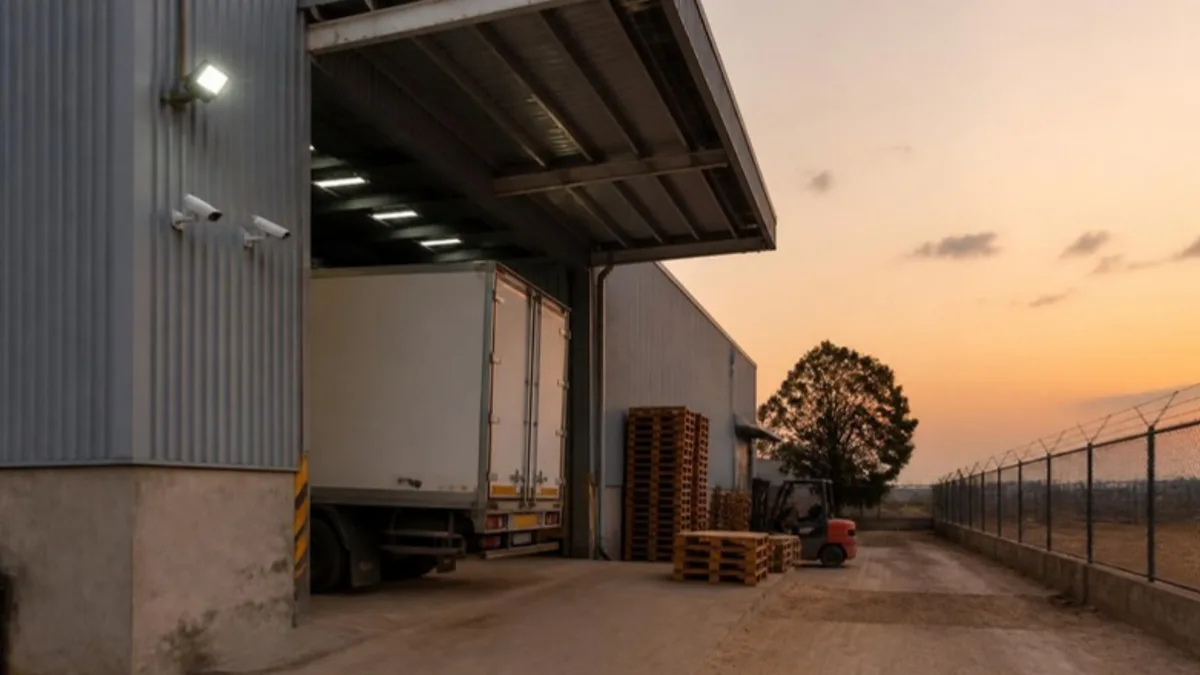
Security cameras for a factory or warehouse in Matola have to survive dust, heat and night-time theft at the perimeter, and still prove who took what. We install a lot of systems along the Matola industrial corridor, from Machava to the port road, and the same five problems come up at almost every site. This guide goes through them one by one, with the camera types and the layout that solve each.
The five problems Matola sites share
- Dust. Trucks, forklifts and unpaved yards coat lenses and clog cabinets within weeks.
- Heat. Recorders left in a tin-roofed store room run hot and die early.
- Distance. The gate, the yard, the warehouse and the office can be two or three hundred metres apart.
- The night perimeter. Long fence lines, no light, stray dogs and wind that set off cheap motion alarms until the guard switches them off.
- The loading bay. Disputes about what left on which truck, and when, surface days later.
A system designed around these five points works. One copied from a shop does not.
The perimeter: AcuSense cameras along the fence
For the fence line we use 4 MP bullet cameras with AcuSense, spaced so each one covers the stretch to the next, with infrared reach of 30 to 50 metres. AcuSense classifies what crosses the line: a person or a vehicle raises an alarm, a dog or a plastic bag blowing past does not. The alarm goes to a screen in the guard house and, if you want, to a phone, with a snapshot so the guard decides in a second whether to walk out.
Where there is an electric fence, we link its alarm zone to the nearest camera, so an alert on the fence pulls up the right picture at once. Floodlights on the fence help any camera, but with ColorVu models at the most sensitive corners you keep colour at night even where the lights are off.
The gate and the weighbridge
The gate needs three views: a camera at plate height to read every number plate in and out, an overview of the gate area, and a camera at the driver window of the gatehouse so the face matches the plate. If there is a weighbridge, the cameras run on the same clock as the weighbridge system, so a ticket and a recording line up to the second when a weight is disputed.
Loading bays and the warehouse floor
One camera per bay, mounted high and looking into the open truck door, is the recording that settles most disputes. A 4 MP camera lets you zoom into pallet labels and seal numbers afterwards. Inside, overview cameras sit at the ends of the longest aisles rather than in the middle, because racking creates blind corridors. Add a camera on the dispatch desk, where paperwork is signed, and one on the forklift charging area, which is where night-shift accidents happen.
Dust, heat and power: the details that decide reliability
- Housings. IP66 or IP67 cameras outdoors; IK10 vandal-proof domes where a hand or a forklift mast can reach.
- Cleaning. Lenses in the yard need a wipe every month in the dry season. We put it in the maintenance plan.
- The recorder. In the office or a ventilated cabinet, never in the store room. A fan and a thermometer cost little; a cooked recorder loses the whole archive.
- Power. A UPS sized for the recorder and the PoE switches, so recording continues through a cut, and surge protection on every long outdoor run, because the lightning season from November to March finds unprotected cable.
- Distance. Network cable to 100 metres, then an industrial PoE switch, a fibre link or a wireless bridge between buildings. Our guide to PoE switches covers power budgets; outdoor Witek switches handle the yard.
- Cable protection. Conduit or armoured cable along the fence, where trucks and grass cutters pass.
How many cameras does a warehouse need?
- Single warehouse with a yard: 8 to 12 cameras: gate, two or three on the fence, one per bay, floor overviews, dispatch desk.
- Factory with production hall, stores and yard: 16 to 32 cameras, with AcuSense on the perimeter and the raw-material store.
- Multi-building site: 32 and up, managed in HikCentral so the security manager watches every building and every camera from one screen, with user roles for guards and supervisors.
The warehouses and logistics page shows how the pieces fit together, and the free site survey gives you the exact count for your layout.
Frequently asked questions
Can the guards get alerts on their phones at night?
Yes. With AcuSense cameras the recorder sends a push notification with a snapshot through the Hik-Connect app only for people and vehicles, so the guards are not woken by every gust of wind. A screen in the guard house shows the same alarms with the live view.
How long should a factory keep recordings?
Thirty days is the usual choice, because dispatch and stock disputes surface late. A 16-camera 4 MP system recording continuously needs roughly 8 to 12 TB for a month, depending on compression and whether some cameras record on motion only. We calculate it for your camera list and fit the drives to match.
Do you link the cameras to an electric fence?
Yes. We supply NEMTEK electric fence equipment and connect the fence alarm zones to the recorder, so a fence alarm brings up the matching camera and is logged with the video.
Can a camera see inside a dark container or truck?
Only with light. Infrared reaches a few metres into an open container, but for reading labels inside a truck you need a work light at the bay. We position the camera so the light helps rather than blinds it.
Plan your site
Send us a sketch of the yard or book a free site survey in Matola. Call or WhatsApp 844888222, email vendas@asslda.com, or request a free quote.
Written by the A.S.S. LDA technical team, Maputo.