Home Alarm System in Maputo: How It Works and What to Choose
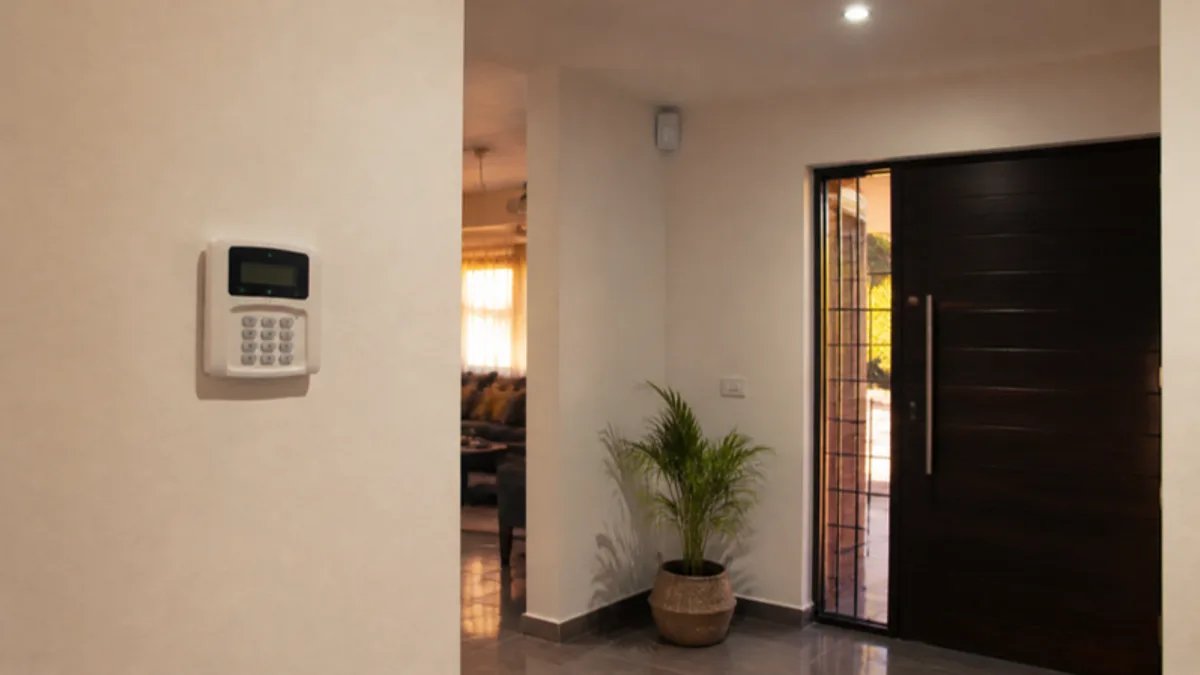
A home alarm system in Maputo warns you the moment someone opens a door or window, or moves inside the house while it is armed. Sensors, a control panel and a siren work together, and a well designed system keeps running through the power cuts that are part of life in Maputo and Matola. This guide explains how the parts fit, what to choose for a house or a flat, and how we design and install it.
How a home alarm system works
Think of the alarm as three layers. Sensors notice something: a door opening, glass breaking, a body moving through the lounge. The control panel decides whether that matters, which depends on whether you armed the house fully, armed only the outside, or left it disarmed. When the answer is yes, the panel sounds the siren and sends an alert to your phone, and to anyone else you chose, such as a neighbour or a security company you contract.
You control it with a keypad by the door, a key fob or an app. Most families use two modes every day: away mode when the house is empty, and night mode, which protects the doors, windows and the garage while you sleep but lets you walk to the kitchen without setting it off.
The parts of a typical system
- Control panel (hub): the brain. It holds the backup battery and the connection to your phone.
- Door and window contacts: two small magnets that notice when a door or window opens. They go on every outside door and on windows that can be reached from the ground.
- Motion sensors (PIR): watch a room or corridor for movement. Pet-friendly models ignore a small dog or cat.
- Glass break detectors: useful for big sliding doors and shop fronts.
- Indoor and outdoor sirens: the outdoor siren with a strobe light tells the street, and any intruder, that the house is protected.
- Keypad and key fobs: to arm and disarm without the phone.
- Panic button: a fixed or wireless button for emergencies, often placed in the main bedroom.
Wired or wireless?
A wired alarm runs a cable to every sensor. It is the classic choice for a house still under construction, when the cables can go inside walls and ceilings before painting.
A wireless alarm, such as the Hikvision AX PRO range we install, talks to its sensors by radio. Each sensor runs for a long time on its own battery and reports when it runs low. Installation takes hours instead of days, nothing has to be chased into walls, and the system moves with you if you rent and later change house. For most finished homes and flats in Maputo, wireless is the practical answer.
Power cuts and connectivity in Maputo
Two local details decide whether an alarm still works on the night you need it.
First, power. The control panel and sirens must carry a backup battery that keeps the whole system running through a cut. Ask how many hours it lasts, and keep the panel away from the hottest part of the house, because heat shortens battery life.
Second, the connection. If the panel reaches your phone only through home Wi-Fi, a power cut that takes down the router also cuts the alerts. A panel with a 4G SIM, or a router on a small UPS, keeps the alerts flowing. Vodacom, Movitel and Tmcel all work; we test the signal at the panel position during the visit.
Alarm, cameras and electric fence together
An alarm tells you that something happened. A camera shows you what. When the two are linked, an alarm on the back door opens the video of the back door in the Hik-Connect app, so you can tell a real intruder from a family member who forgot the code.
For houses with a boundary wall, the alarm is the inner layer. The outer layer is an electric fence or infrared beams on the wall, which raise the alarm before anyone reaches the house. Our intrusion alarm and perimeter protection page shows how the layers fit.
How we design a system for your house
We start with a free visit, the same way we do for camera systems (what happens at the site survey). We walk the house with you and mark every way in: doors, ground floor windows, the garage, the roof hatch, the staff quarters. Then we decide which zones should stay armed at night, where the keypad goes, and where the outdoor siren will be heard by the neighbours.
A typical three-bedroom house in Sommerschield, Triunfo or Matola needs contacts on the outside doors, two or three motion sensors covering the corridors and living areas, one outdoor siren and a keypad. Larger houses and offices add zones; a flat in a building often needs less, because the building already controls the main entrance.
Frequently asked questions
Will my dog set off the alarm?
Not with pet-friendly motion sensors installed at the right height and angle. They ignore small animals but still detect a person. For large dogs we keep the sensors to rooms the dog does not use, and rely on door contacts elsewhere.
Does the alarm work during a power cut?
Yes, when the panel and sirens have backup batteries and the alerts do not depend on a router without power. We fit both and test them at the end of the installation.
Can I control the alarm from my phone?
Yes. You arm and disarm, see which sensor triggered, and receive push notifications. Several family members can each have their own access, and you can remove someone at any time.
Can an alarm be added to a house that already has cameras?
Yes. A wireless alarm installs without touching the camera cabling, and it can be linked to existing Hikvision cameras so that an alarm brings up the right camera.
Get a free quote
Tell us about your house and we will design the right alarm for it. Message us on WhatsApp +258 84 488 8222 or get a free quote.
Written by the A.S.S. LDA technical team, Maputo.