UPS for CCTV: Keep Cameras Recording Through Power Cuts
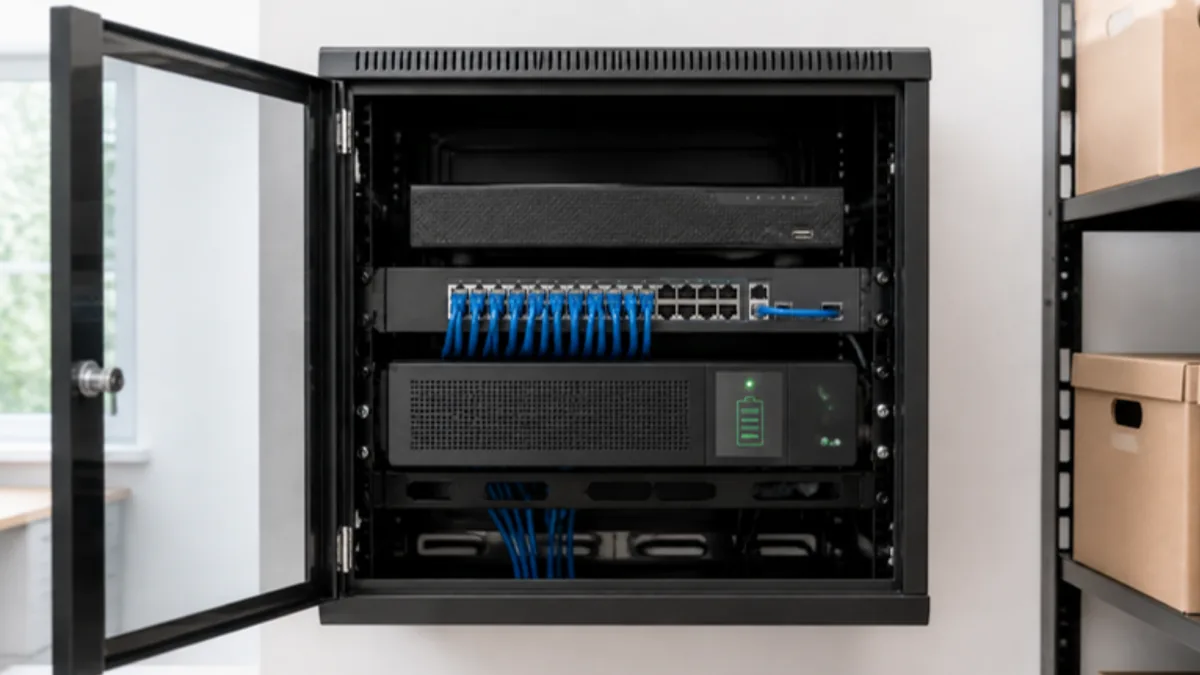
A UPS for CCTV keeps your recorder, PoE switch, router and cameras running when the power cuts, so the system never goes blind. Here is how a UPS works, how to size it and how long it should last in Maputo and Matola.
What stops when the power cuts, and what must stay on?
Without backup power, everything stops at once. The cameras go dark, the recorder stops writing, and the router drops the internet link, so you cannot even see that something is wrong.
Four things have to stay on together:
- The recorder (NVR or DVR). It holds the footage, and a sudden shutdown while it writes can damage the hard drive.
- The PoE switch. It powers every IP camera over the network cable, so if it stops, all the cameras stop. Our post on PoE switches for CCTV explains the power budget.
- The router or 4G modem. Without it the system still records, but you lose remote viewing and alerts.
- The cameras. Analog cameras usually run from a separate power box, which must also sit behind the UPS.
Keep lights, air conditioning and the gate motor off the CCTV UPS. They drain the battery in minutes.
How does a UPS work?
A UPS (uninterruptible power supply) is a battery, a charger and an inverter in one box. When the mains fails, the inverter turns battery power back into normal mains power, fast enough that the recorder never notices.
Line-interactive or online?
A line-interactive UPS feeds your equipment from the mains and corrects small voltage swings. When the power cuts, it switches to battery in a few milliseconds. It suits most homes, shops and offices.
An online (double conversion) UPS runs the equipment from its inverter all the time, so there is no switch at all. It also cleans up bad power: low voltage at the end of a long line, spikes when the supply returns, and the rough output of many generators. For a factory, a warehouse or a site on a generator it is the safer choice.
How to size a UPS for CCTV
Sizing comes down to two numbers: the load in watts and the hours you want it to run. Take each figure from the device label or datasheet, and use the maximum for cameras, because infrared at night raises their draw.
A worked example for an 8-camera IP system:
- Recorder with one surveillance drive: about 15 W.
- Eight cameras at about 6 W each: 48 W, plus about 10 W for the switch itself.
- Router: about 10 W.
- Total: about 83 W, rounded up to 90 W.
For three hours, that is 90 W x 3 h = 270 Wh. Add about 15 percent for inverter losses, so roughly 320 Wh. A lead-acid battery lasts longer if you use only about half its capacity, so double it to about 640 Wh. At 12 V that means around 53 Ah, so in practice a 12 V battery of 55 Ah or more.
The UPS must be rated well above 90 W in watts, not only in VA, and it must accept external batteries. The small internal batteries in most units give minutes, not hours. For the hours, look at the longest cuts you had at that address last year and add a margin.
Surge and lightning protection in the rainy season
From November to March, storms bring lightning and voltage spikes, and spikes come when the supply returns. A good UPS filters the mains side, but surges also enter through the cables of outdoor cameras.
- Put a surge protector on the mains feeding the UPS.
- Fit Ethernet surge protectors on long outdoor camera runs, close to the switch.
- Connect the protectors and the rack to a proper earth. A protector with no earth does very little.
No UPS survives a direct strike, but these layers stop the usual storm damage: dead switch ports, burnt camera boards and recorders that will not start.
Do you still need a UPS with a generator or solar?
Yes. Even an automatic changeover takes several seconds to start the generator and switch. Without a UPS the recorder reboots, which takes minutes, and that footage is lost. Generator power also wanders, so an online UPS works best behind one.
For cameras far from the main building, on a farm, a building site or a long perimeter, solar is often simpler than pulling mains cable. A panel, a charge controller and a battery run a camera day and night, with a 4G link on Vodacom, Movitel or Tmcel. Size the battery for cloudy days in the rainy season, not for a sunny day in July. Our guide on solar security cameras for remote sites covers the details.
Looking after the batteries, and knowing when power fails
Batteries wear out first. Sealed lead-acid batteries lose capacity every year, faster in heat, so a UPS in a hot cupboard will not last as long as the label suggests. When the runtime you measure falls well below what you had at installation, replace the battery.
Test it every few months. On a quiet day, switch off the mains feed to the UPS, time how long the system runs, and write the result down.
Keep the router on the UPS so the system can still reach you during a cut. In the Hik-Connect app you can get notifications for events such as a hard drive error or the device going offline, which tells you the battery has run out. Test the alerts once; do not assume them.
Frequently asked questions
Can I use an ordinary computer UPS for my cameras?
For a few minutes, yes, but most office UPS units have small internal batteries and no port for external ones. For hours of backup, choose a unit that accepts external batteries.
Is an inverter with batteries the same as a UPS?
Not always. Many home inverters take longer to switch over, long enough to make a recorder or switch reboot. A true UPS switches fast enough, or does not switch at all in the online type, so the system keeps recording. Check the transfer time on the datasheet first.
Will a power cut delete my recordings?
Footage already saved normally stays on the drive. The problem is the cut itself: nothing records while the power is off, and a hard shutdown during writing can damage the file system or shorten the drive's life. A UPS removes both risks.
How many hours of backup should I plan for?
Start from the longest cuts you had at that address in the last year and add a margin. A farm or a site with long outages may need a larger battery bank or solar.
Keep your cameras recording
A.S.S. LDA designs and installs CCTV in Mozambique with the backup power, surge protection and network it needs, and we can add a UPS for CCTV to a system you already have. The site survey and quote are free. Message us on WhatsApp +258 84 488 8222 or get a free quote.
Written by the A.S.S. LDA technical team, Maputo.